
What Evidence Should You Collect After a Slip and Fall Accident?
If you were hurt in a slip and fall, the condition that caused your accident may disappear quickly. A store employee may clean up a spill, a landlord may repair a broken step, or a business may overwrite surveillance footage.
That is why collecting evidence after a slip and fall accident can be important. Useful evidence may include photos and videos of the hazard, witness information, an incident report, medical records, surveillance footage, damaged clothing or shoes, and records showing your financial losses.
You do not have to investigate everything yourself, especially if you are seriously injured. Your health comes first. If you’re not sure where to start, SteinLaw’s New York slip and fall lawyers can help you preserve evidence and understand your options.
Depending on where and how your accident happened, useful evidence may include:
- Photos and videos of the dangerous condition
- Photos of the surrounding area
- Pictures of your injuries
- Witness names and contact information
- A store, property, or business incident report
- Surveillance camera footage
- Your shoes and clothing from the accident
- Medical records and bills
- Pay stubs and documentation of missed work
- Receipts for accident-related expenses
- Notes about what happened
- Communications with the property owner or insurance company
- Maintenance, inspection, or cleaning records obtained during an investigation
Some of this evidence can be collected at the scene. Other records may need to be requested later by your attorney.
Why Does Evidence Matter in a Slip and Fall Claim?
A slip and fall claim generally involves more than showing that you fell on someone else’s property. There must usually be evidence connecting your injury to a dangerous condition and showing why a property owner, business, or another responsible party may have been negligent.
Negligence generally means failing to use reasonable care under the circumstances.
For example, a grocery store can be liable if employees knew about a liquid spill and failed to clean it or warn customers. A landlord may be responsible for an unsafe stairway that should have been repaired.
Evidence can help answer important questions such as:
- What caused you to fall?
- How long had the dangerous condition existed?
- Did the property owner or employees know about it?
- Should they reasonably have discovered it?
- Were warnings posted?
- Was the area inspected or maintained?
Take Photos and Videos of What Caused Your Fall
If you can safely do so, photograph or record the accident scene before the condition changes. Common slip and fall hazards include: water or other liquids on a floor, food or debris, recently mopped floors, loose rugs, broken or uneven flooring, cracked sidewalks, poor lighting, exposed cords, and merchandise blocking walkways.
Take close-up photographs of the hazard and wider photographs showing where it was located. Also photograph your visible injuries, and continue documenting your recovery over the following weeks, not just on the day of the accident.
Report the Accident and Ask for an Incident Report
You should generally notify the person responsible for the property as soon as reasonably possible: a store manager, landlord, property manager, or security employee.
Explain what happened accurately and stick to the facts. Avoid guessing about details you do not know or saying the accident was your fault simply because you feel embarrassed about falling.
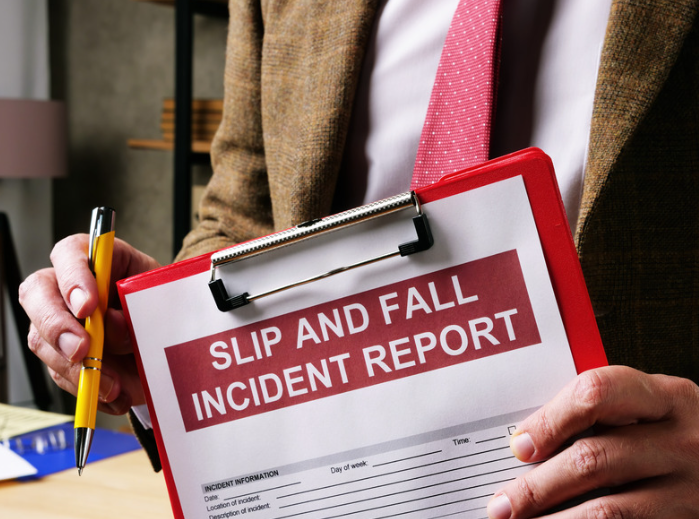
Many businesses create an incident or accident report when someone is injured on their property. Ask whether a report is being completed and request a copy if one is available. If the business will not provide a copy, make a note of who took your report, when you reported the accident, and what information you provided.
Get Contact Information From Anyone Who Saw What Happened
Witnesses can provide important information. A witness does not have to see the exact moment you fell, someone may have seen the dangerous condition beforehand or noticed an employee discussing it. Try to obtain a full name, phone number, and email address. Independent witnesses can be particularly helpful if you and the property owner disagree about what happened.
Preserve Surveillance Footage

Stores, hotels, apartment complexes, restaurants, parking garages, and other properties often use security cameras that may show your fall, the condition that caused it, how long it existed, and whether warning signs were present. A business may not voluntarily hand over this footage, and systems don’t always keep recordings indefinitely. Older footage can be overwritten. If you notice cameras near where you fell, write down their locations or photograph them.
Save the Shoes and Clothing You Were Wearing
Do not immediately throw away your shoes or damaged clothing after a serious slip and fall.
The shoes you were wearing may become relevant if an insurance company argues that your footwear contributed to the accident. Clothing may also show stains, tears, or other evidence related to the fall.
Keep these items somewhere safe and avoid altering their condition until you have spoken with an attorney.
Seek Medical Care and Keep Your Medical Records
If you suffer a serious injury, call 911 or seek emergency medical care. Even when an injury initially seems manageable, symptoms from injuries like concussions, sprains, or spinal injuries may become more noticeable later. Keep records such as: emergency room paperwork, doctor’s notes, imaging reports, physical therapy records, and medical bills.
Follow your medical provider’s instructions and attend recommended follow-up appointments.
Keep Evidence of Lost Wages and Other Financial Losses
A serious injury may affect your finances as well as your health. Keep records showing accident-related expenses and income losses, including medical bills, pay stubs, records of missed shifts, employer correspondence, and other out-of-pocket costs.
What Is Premises Liability?
Premises liability is an area of personal injury law involving injuries caused by unsafe conditions on property. Property owners and businesses generally have a duty to keep their property reasonably safe for people lawfully on it. In New York, that duty applies to stores, landlords, and other property owners, and it can also extend to the city or state if the hazard was on public property, such as a sidewalk or subway station. Those claims carry much shorter deadlines, covered below.
Not every fall means the property owner was negligent. Common examples include failing to clean a known spill, ignoring a recurring leak, leaving debris in a walkway, or providing inadequate lighting. Liability depends on the facts of the accident and applicable law.
Who Could Be Responsible, and What Compensation May Be Available?
The responsible party isn’t always obvious. It could be a property owner, landlord, retail business, or property management company, and a property may be owned by one company and maintained by another. SteinLaw’s premises liability attorneys can investigate who controlled the area.
If another party’s negligence caused your injuries, you may be able to pursue compensation for medical expenses, lost wages, pain and suffering, and other losses depending on your case.
The compensation available in a particular case depends on factors such as the severity of the injuries, the evidence, applicable law, and insurance coverage. No specific outcome or amount of compensation can be guaranteed.
What Should You Avoid Doing After a Slip and Fall?
Knowing what not to do can also help you avoid losing important evidence or creating unnecessary issues with your claim.
After an accident, avoid:
- Leaving without reporting the accident when you are reasonably able to do so
- Admitting fault
- Guessing about facts you do not know
- Signing documents you do not understand
- Giving unnecessary statements about your injuries
- Throwing away shoes or damaged clothing
- Ignoring recommended medical care
- Posting details about the accident on social media
- Losing receipts, bills, or employment records
- Waiting unnecessarily to preserve evidence that may disappear
If an insurance company asks you to provide a recorded statement or sign documents, you may want to speak with an attorney first.
How Long Do You Have to File a Slip and Fall Claim in New York?
Under New York’s Civil Practice Law and Rules (CPLR) Section 214, you generally have three years from the date of the accident to file a personal injury lawsuit against a private property owner, business, or landlord. If your fall happened on property owned by a city, county, or other government entity, including a public sidewalk or a New York City subway station, the deadline is much shorter: you typically must file a Notice of Claim within 90 days and start the lawsuit within one year and 90 days.
Contact SteinLaw About Your Slip and Fall Accident
If you or a loved one was injured in a slip and fall, you may be dealing with medical bills, missed work, pain, and questions about what to do next. Because evidence can disappear quickly and your filing deadline may be much shorter than three years, especially if a government entity is involved, it’s worth talking to a lawyer sooner rather than later.
SteinLaw Injury Lawyers can review what happened, investigate the property conditions, and help determine whether negligence may have played a role. Our team may also be able to help preserve evidence and identify the parties who could be legally responsible.
Contact SteinLaw today for a free case evaluation. We may be able to help you pursue compensation for medical expenses, lost income, pain and suffering, and other losses. We do not get paid unless you do.